

- Closed
Inviting Fortune: Auspicious Symbols in Japanese Art
At the Museum
| Dates | |
|---|---|
| Venue | The Museum of the Imperial Collections, Sannomaru Shozokan |
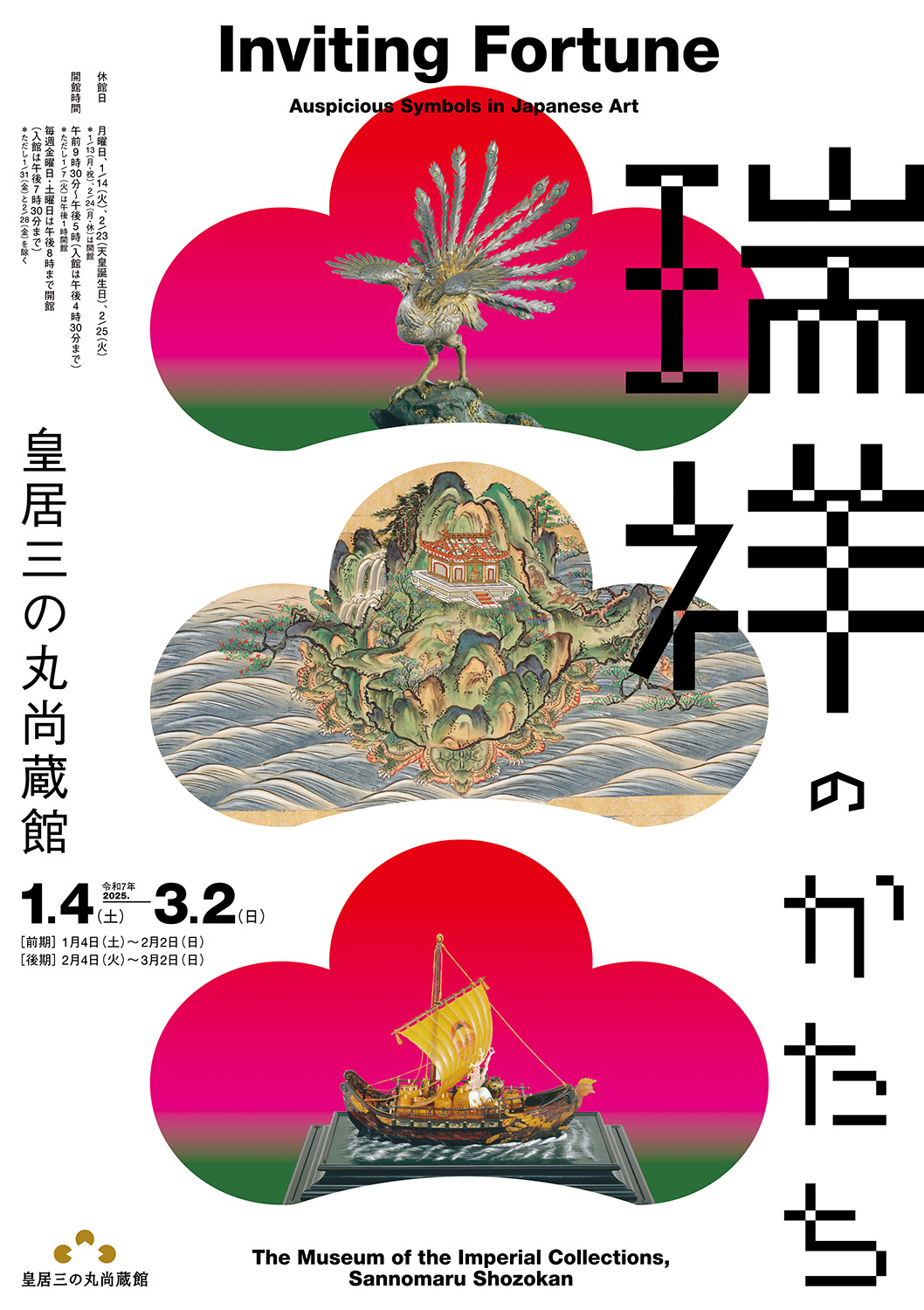
The New Year marks the beginning of a new chapter in life. Throughout history, people have sought to invite good fortune at this time by incorporating auspicious symbols into their celebrations. One example rooted in Chinese traditions is Mount Penglai, the island of the immortals. In Japan, miniature versions with cranes and turtles were crafted to invoke longevity. Mount Penglai’s associations with paradise were eventually transposed to Japan’s own Mount Fuji, a peak historically venerated as a sacred mountain.
The phoenix is another popular motif that originated in China, where it was revered as a legendary bird heralding the arrival of a great sovereign. In Japan, the phoenix was frequently incorporated into paintings and decorative arts as a symbol of nobility, particularly works associated with the Imperial Household. Other mythical beasts, like the majestic qilin and Chinese lion, came to embody wishes for peace and harmony.
This exhibition explores the rich world of auspicious symbols in Japanese art, inviting visitors to embark on a journey through a collection of works brimming with hope for a bright future.
Exhibition Website List of works(PDF 1.1 MB)Exhibition Overview
| Exhibition Dates | |
|---|---|
| Hours |
9:30 a.m.–5:00 p.m. Extended hours: On Fridays and Saturdays, the Museum opens until 8:00 p.m. (last admission 7:30 p.m.) except Fridays, January 31 & February 28. |
| Closed |
Mondays, February 23 (The Emperor's Birthday). |
| Venue |
The Museum of the Imperial Collections, Sannomaru Shozokan |
| General Admission |
Adults: 1,000 |
| Number of objects in the exhibition |
46 works (All housed in The Museum of the Imperial Collections, Sannomaru Shozokan.) |
| Organizer |
The Museum of the Imperial Collections, Sannomaru Shozokan |
| Website |
https://shozokan.nich.go.jp/feature/2024inviting-fortune/index_en.html |
List of Works
-
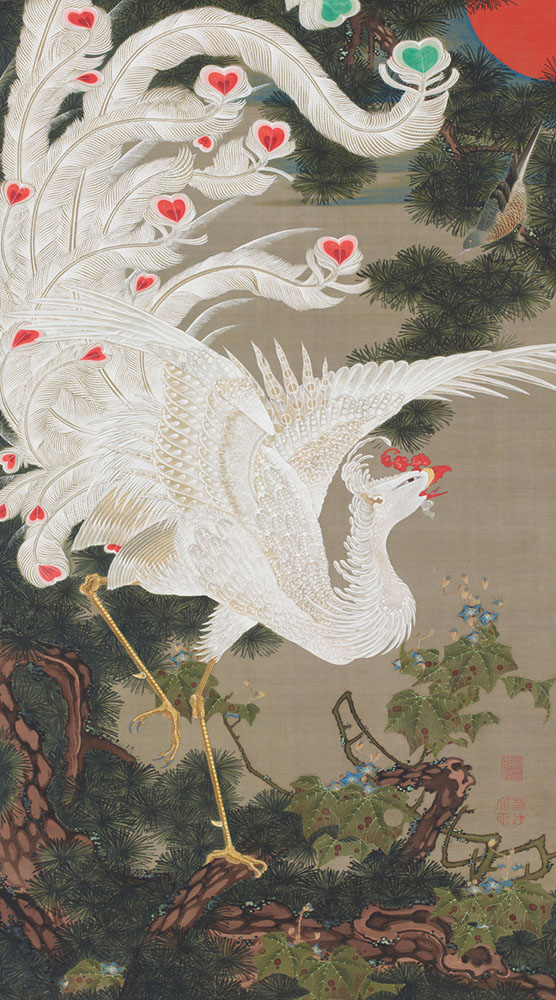
“White Phoenix on an Old Pine Tree” from Colorful Realm of Living Beings
Ito Jakuchu
Edo period, circa 1766. National Treasure
- Dates
-
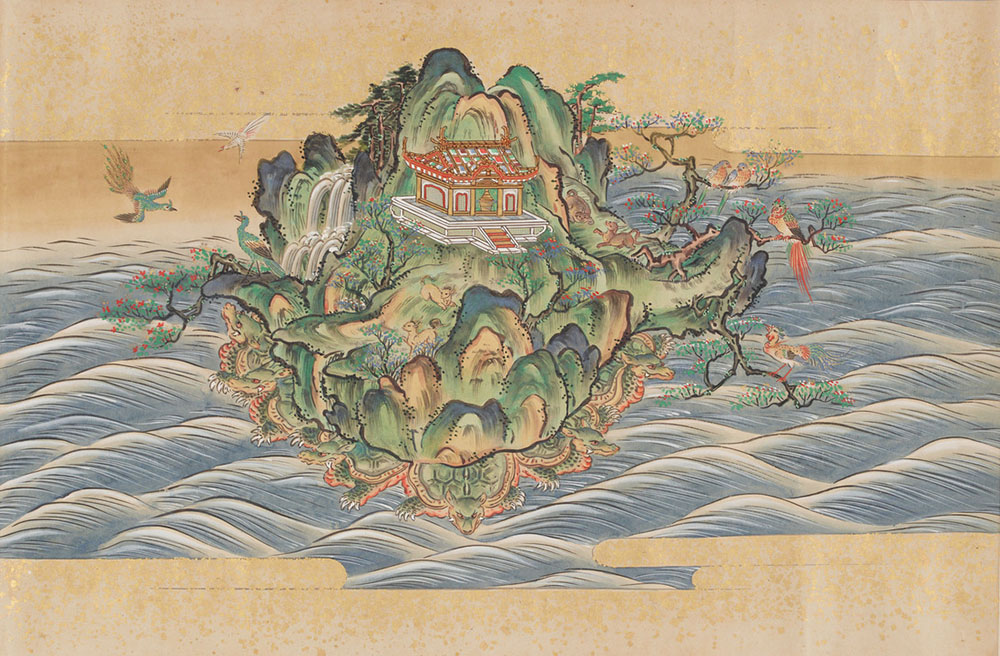
Volume 1 of Illustrated Tale of Mount Penglai (detail)
Edo period, 17th–18th century
- Dates
-
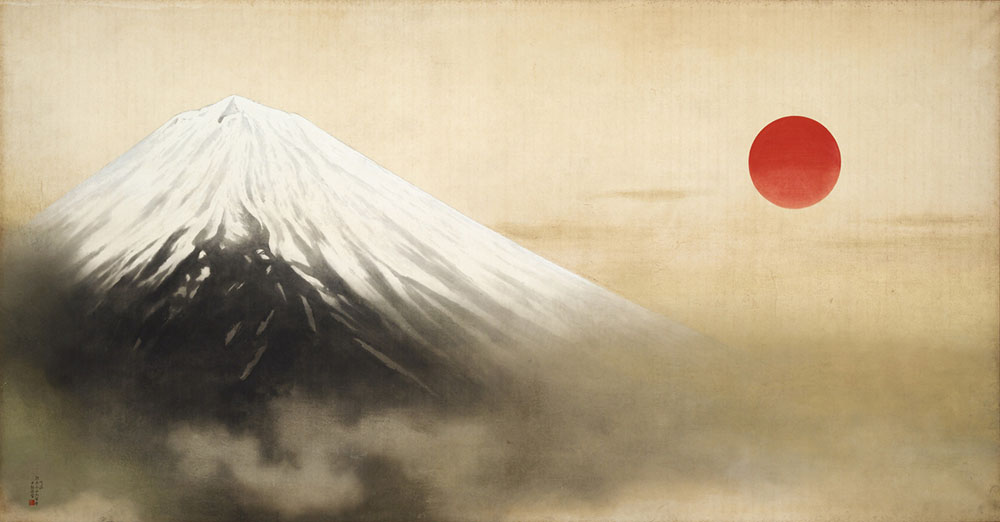
Land of the Rising Sun, Japan
Yokoyama Taikan
Showa era, 1940
- Dates
-
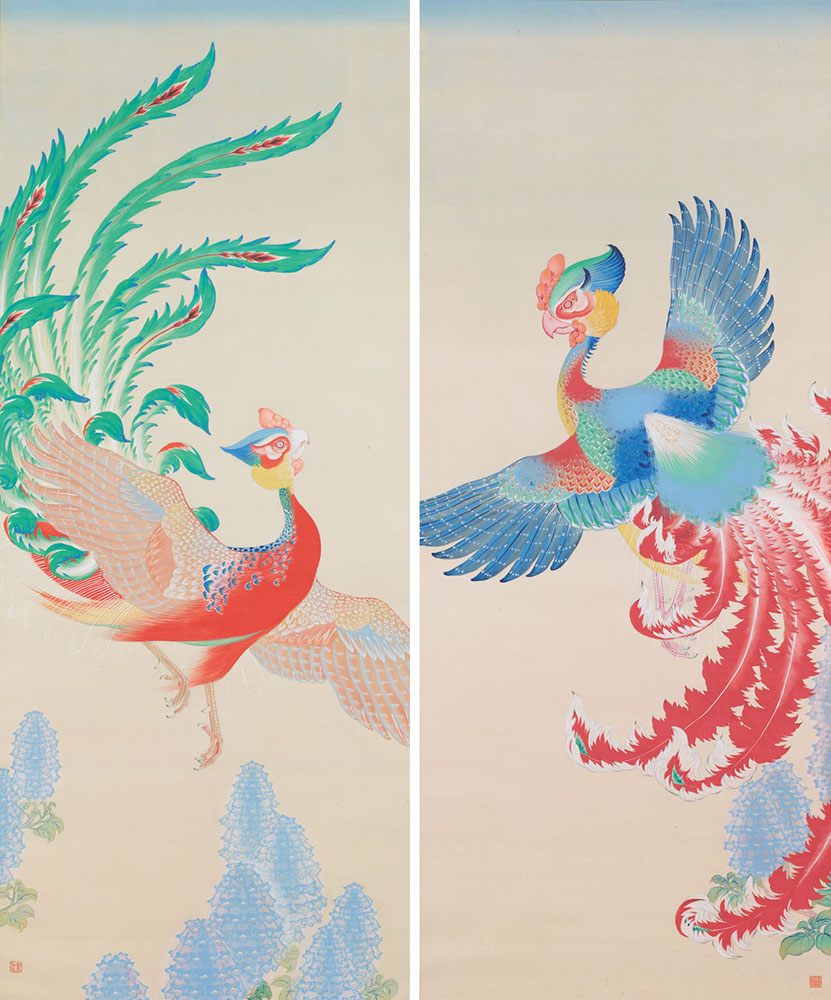
Phoenixes
Yuki Somei
Taisho era, 1925
- Dates
-
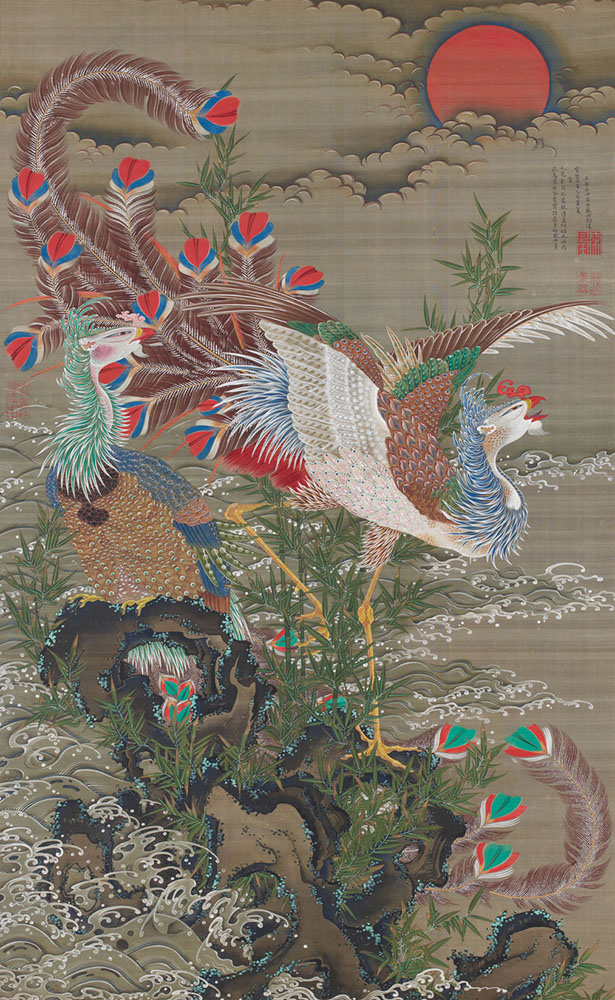
Phoenixes and Rising Sun
Ito Jakuchu
Edo period, 1755
- Dates
-
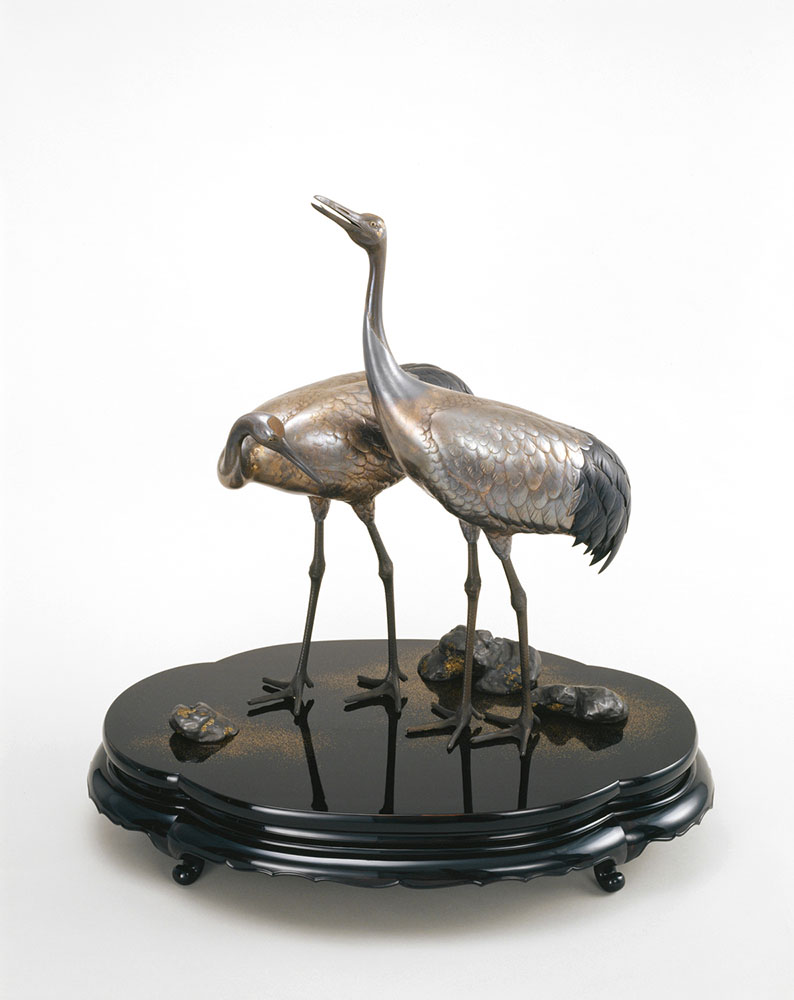
Pair of Cranes
Tsukada Shukyo, Kurokawa Yoshikatsu
Taisho era, 1915
- Dates
-
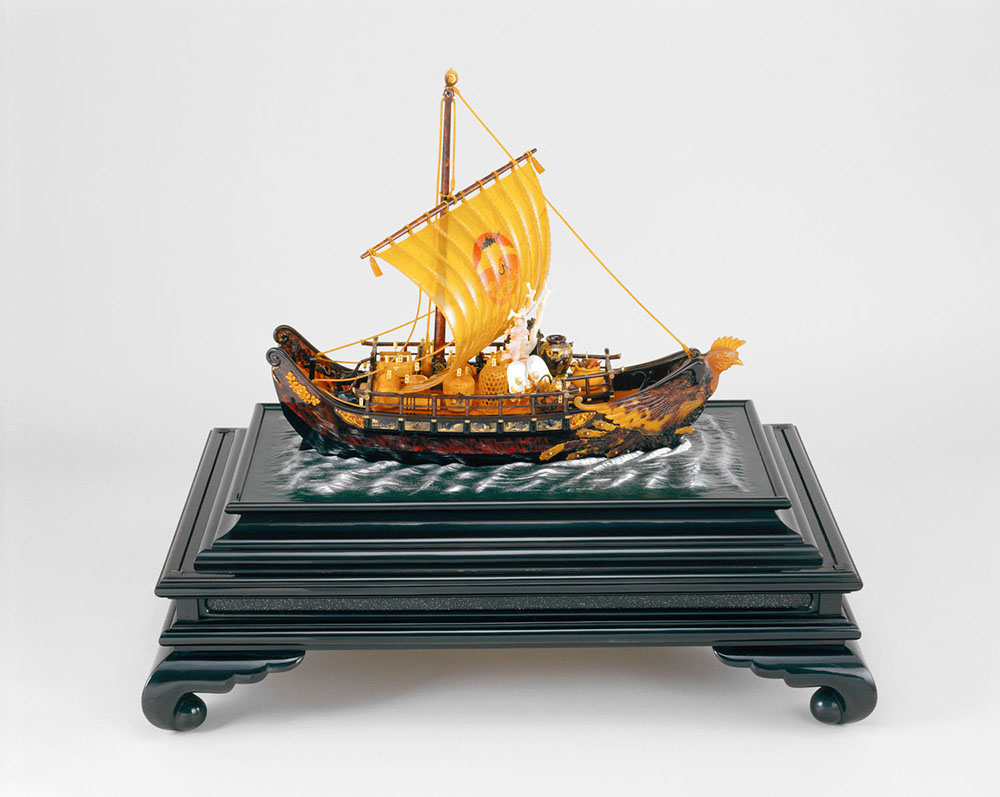
Treasure Ship "Nagasaki-maru"
Ezaki Eizo
Taisho era, 1916
- Dates
-
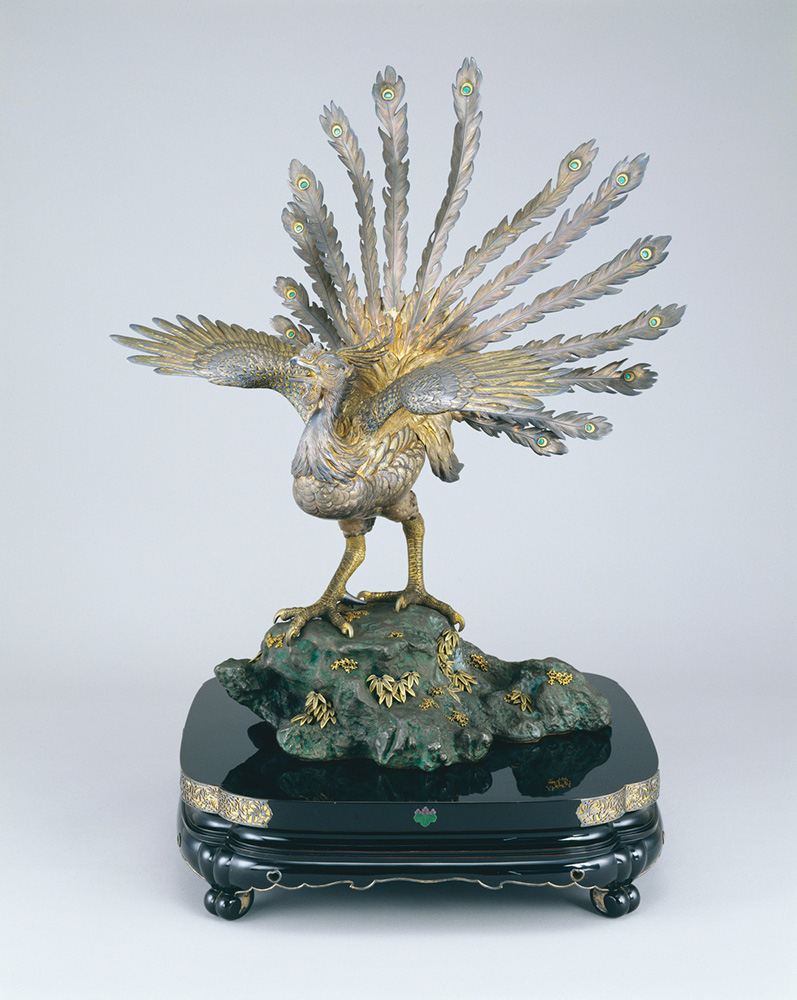
Phoenix
Unno Yoshimori II
Taisho era, 1916
- Dates
-
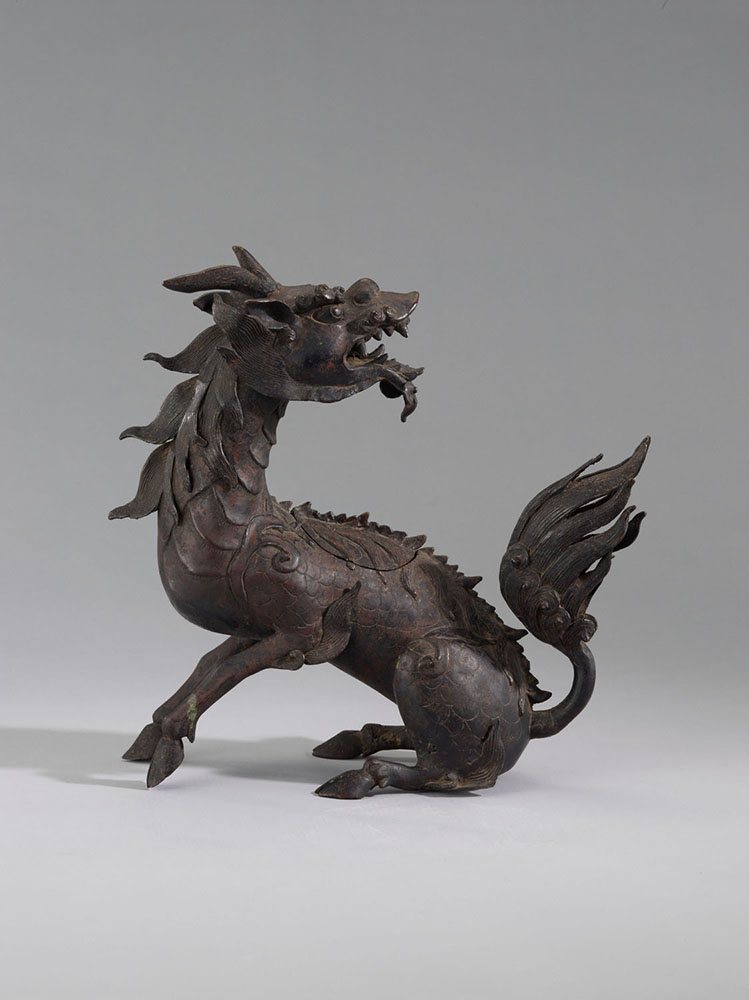
Incense Burner Shaped Like a Mythical Beast (Qilin)
Edo period, 19th century
- Dates
-
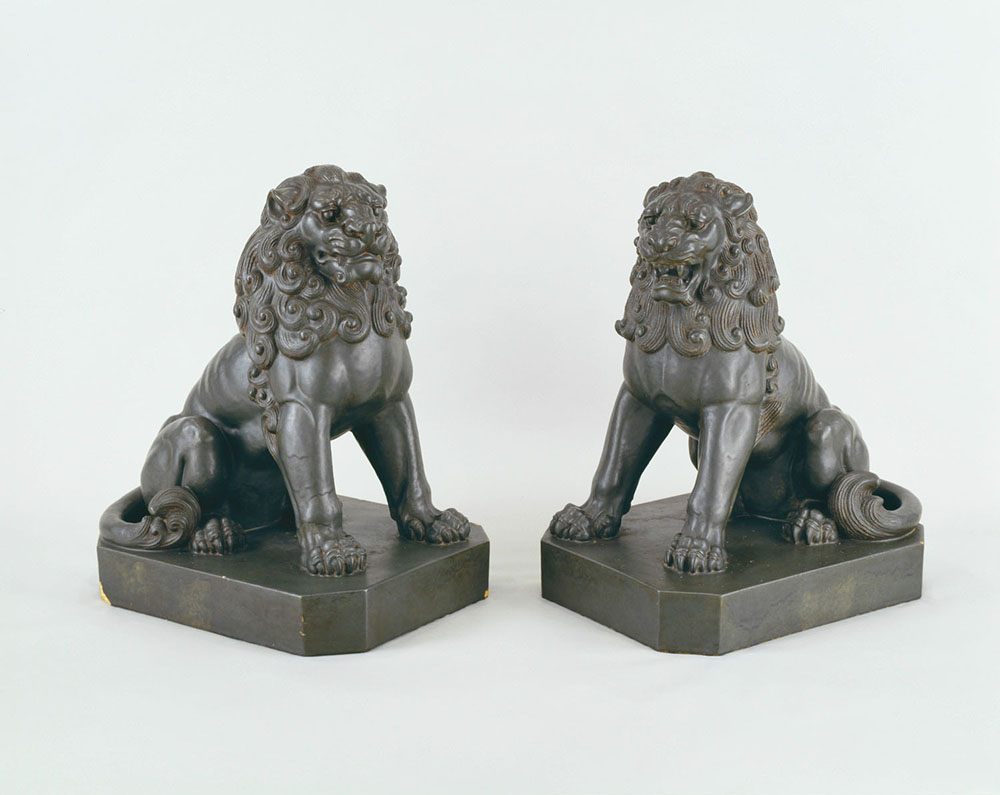
Pair of Chinese Lions
Numata Ichiga
Showa era, 1928
- Dates